

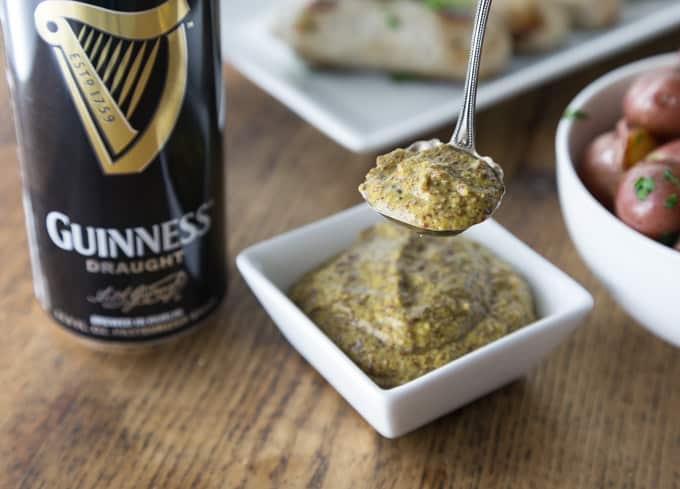
Guinness isn't just for sipping - it makes an incredible condiment too. This homemade Guinness mustard recipe combines whole mustard seeds with rich stout beer to create a bold, tangy beer mustard that's perfect for brats, burgers, sandwiches, and Irish favorites. Easy to make and packed with deep, malty flavor, this whole grain mustard is far better than anything from the store.
Jump to:
- Why This Guinness Mustard Is The Best
- The Science Behind Homemade Mustard
- Mustard: One of Europe's Oldest Native Spices
- Where Do I Get Bulk Mustard Seeds?
- Top Tips for Great Guinness Mustard
- What to serve with Guinness mustard?
- Interesting Facts About Guinness and Mustard
- Frequently Asked Questions
- 📖 Recipe
Why This Guinness Mustard Is The Best
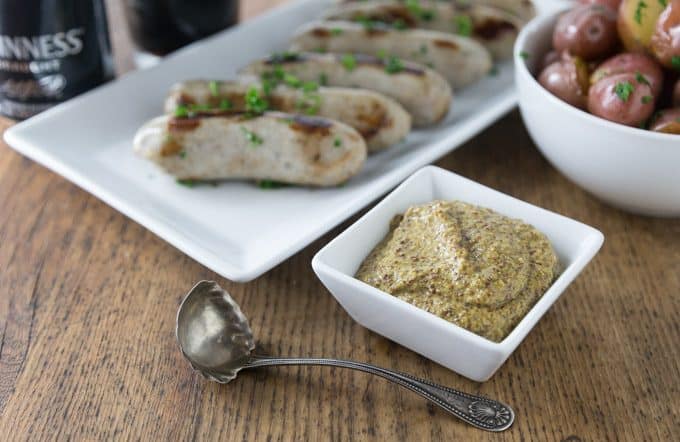
This homemade whole grain mustard combines the deep roasted character of Guinness stout with tangy mustard seeds to create a uniquely bold condiment you won't find in stores. While gourmet mustards are available everywhere, making your own at home lets you control the flavor, heat, and sweetness - and it's easier than you think.
I never in a million years thought I would be making my own whole grain mustard, let alone this Guinness recipe, because most well-stocked grocery stores offer a large selection of gourmet mustards. I also thought that the process required special equipment. A few months ago, while reading a food magazine, inspiration struck.
The Science Behind Homemade Mustard
Making homemade mustard feels a little like a kitchen science experiment - and in many ways, it is.
Mustard seeds contain natural compounds and an enzyme called myrosinase. When the seeds are crushed and mixed with liquid, a chemical reaction occurs, creating mustard's signature heat and sharp flavor. The temperature of that liquid directly affects how strong your mustard becomes.
Cold liquid (like chilled Guinness or vinegar) slows the reaction but preserves the enzyme, producing a shaper, spicier, more pungent mustard.
Warmer or hot liquid partially deactivates the enzyme, resulting in a milder, smoother, more mellow flavor.
So if you love bold, sinus-clearing heat, start cold. Prefer a gentler, deli-style mustard? Use lukewarm liquid instead.
Mustard: One of Europe's Oldest Native Spices
Mustard is one of the few spices native to Europe, and it has flavored food for thousands of years. Ancient Greeks and Egyptians used mustard seeds to season their dishes, while the Romans fully embraced its bold heat. In fact, their Latin name for mustard - mustum ardens, meaning "burning must" - perfectly captures its sharp bite. The Romans were also early innovators, mixing crushed seeds with fresh grape juice (verjus) to create a paste that closely resembled the mustard we know today.
From there, mustard spread across Spain and Gaul, becoming so popular in medieval France that spice merchants classified it as épices d'enfer - "spices from Hell" - a nod to its fiery kick. Although often associated with European cooking, mustard has also been cultivated in China for over 2,500 years.
Now that you know how to make Guinness mustard, you can start experimenting with other liquids too - maybe champagne or cider next? Just remember to let your homemade mustard rest for two or three days before serving so the flavors mellow and develop.
Where Do I Get Bulk Mustard Seeds?
If you want to make a big batch of this mustard you can buy bulk brown mustard seeds

Top Tips for Great Guinness Mustard
Making homemade Guinness mustard is easy, but a few small tricks make a big difference in flavor and texture.
- Start cold for bold flavor: Use cold Guinness and vinegar if you want a sharper, spicier mustard. Cold liquid preserves the natural heat from the mustard seeds.
- Soak longer for better texture: Let the seeds soak at least 24-36 hours. This softens them fully and helps create that creamy, spreadable consistency.
- Blend to your style: Pulse briefly for a coarse, whole-grain mustard or blend longer for a smoother, deli-style spread.
- Taste and adjust sweetness: After blending, add a touch more honey or brown sugar if you prefer a sweeter balance to the stout's bitterness.
- Let it mellow: Fresh mustard can taste harsh at first. Rest it in the fridge for 2-3 days to allow the flavors to round out and deepen.
- Store properly: Keep your Guinness mustard in airtight glass jars in the refrigerator. Thanks to the vinegar and beer, it will stay fresh for months.
What to serve with Guinness mustard?
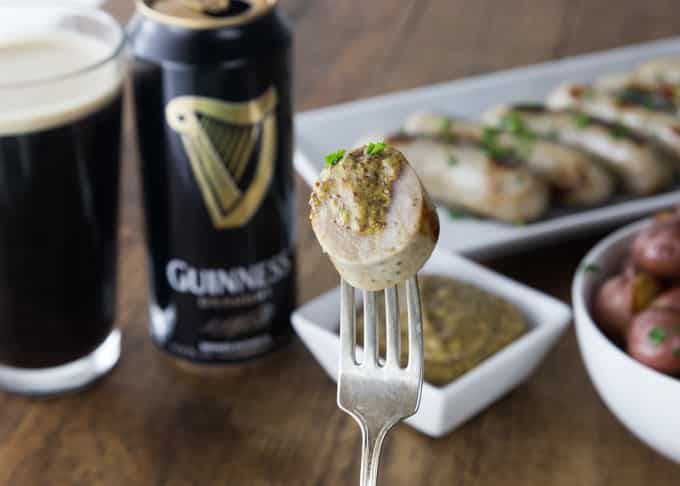
This Guinness mustard pairs beautifully with hearty Irish comfort foods. Serve it alongside Dublin Coddle, where its tangy kick balances the rich sausages and potatoes, or spread it thick on warm slices of Irish brown bread for a simple, flavorful snack. It's also right at home next to a bowl of Guinness stew, where the malty stout flavors in both the stew and the mustard complement each other perfectly. Whether you're building a St. Patrick's Day spread or just craving cozy pub-style dishes, this homemade beer mustard brings everything together.
Interesting Facts About Guinness and Mustard
- Guinness was first brewed in 1759: Arthur Guinness signed a 9,000-year lease at St. James's Gate Brewery in Dublin. The roasted barley used in Guinness gives it the deep coffee-like flavor that makes it ideal for bold condiments like mustard.
- Whole grain mustard is the traditional European style: Unlike smooth yellow mustard, whole grain mustard preserves the texture of the seeds. This gives it a more complex flavor and makes it especially popular in France, Germany, and Ireland.
- Dark beers work especially well for mustard: Stouts and porters contain roasted barley, which adds deep, slightly bitter, chocolate-like notes. This balances the acidity of vinegar and enhances the overall flavor.
- Mustard is naturally preservative: Because of its acidity and natural antimicrobial compounds, homemade mustard can last for months in the refrigerator without spoiling.
- Guinness mustard is a traditional pub condiment: Beer mustards are commonly served in Irish and British pubs alongside sausages, pork pies, and cheese boards.
- You can customize mustard endlessly: Different liquids create different flavors. Try using hard cider, whiskey, champagne, or even apple juice to create unique variations.
Frequently Asked Questions
Guinness mustard has a bold, tangy flavor with deep malty notes from the stout. It's slightly sweet, mildly bitter, and more complex than classic yellow mustard - perfect for sausages, burgers, and sandwiches.
Fresh mustard can taste extra sharp at first, even bitter. Crushing the seeds releases natural compounds that create heat. Let your Guinness mustard rest in the fridge for 2-3 days to mellow and smooth out the flavor.
Yes. Cold liquid produces a stronger, spicier mustard, while warm or hot liquid creates a milder, smoother flavor because heat reduces the enzyme reaction that creates mustard's kick.
Stored in an airtight jar in the refrigerator, homemade mustard can last 2-3 months or longer. The vinegar and beer help naturally preserve it.
Absolutely. Try another stout, porter, or even a brown ale. Each beer adds a slightly different flavor profile, so it's fun to experiment.
It's delicious with brats, corned beef, roast beef sandwiches, burgers, pretzels, charcuterie boards, and Irish pub-style dishes like soda bread or stew.
Yes - because this recipe isn't cooked, some alcohol from the Guinness will remain in the finished mustard. The amount may lessen slightly as it sits (a little can evaporate over time), but it won't fully disappear. If you need an alcohol-free option, use non-alcoholic stout or replace the beer with extra vinegar/water (the flavor will be different, but still tasty).
📖 Recipe
Homemade Guinness Mustard - Irish Beer Mustard Recipe
Ingredients
- 1 cup brown mustard seeds
- ½ cup yellow mustard seeds
- 14.9 oz Guinness
- 8 oz apple cider vinegar
- 3 teaspoon salt
- 1 teaspoon allspice
- ¼ teaspoon turmeric
- ¼ cup brown sugar
- 3 tablespoon honey
- ¼ teaspoon cinnamon
Instructions
- Combine salt, allspice, turmeric and brown sugar in a small bowl. Next, in a glass mixing bowl, place the mustard seeds, Guinness, and vinegar. Add the spice mixture
- Cover and allow the mixture to sit undisturbed for about 24-36 hours.
- Finally, add the honey and cinnamon. Use an immersion blender to break up the solids.
- Place in glass jars and seal, then allow the mustard to rest for two to three days before using.
Nutrition

Elaine @ Dishes Delish says
Yum, I could really get into slathering this mustard on everything! I love that you use Guinness! It is such a nice addition to most recipes. I find it gives dishes a rich flavor!
Analida says
Hi Elaine, yes Guinness adds a great depth of flavor to foods.
Sue Ringsdorf says
Hi Analida! This mustard looks fantastic! And using it on sausages is the only way to go! Thanks for sharing this recipe and I cannot wait to try it!
Analida says
Hi Sue! Thanks for your comment. I think you will like it.
Christine says
This is super interesting - I never would have thought to add Guiness to mustard. Sounds delicious!
Analida says
Thanks! Yes, it is interesting. I am going to make champagne mustard next.
Veronika Sykorova says
Everything is better with mustard! I love your creative take on it!
Analida says
Thanks Veronika! 🙂
Melanie @ Nutritious Eats says
How fun! We love mustard- so many great uses for it apart from sandwiches. I love it in salad dressing!
Analida says
Awesome!!! Stay tuned, because pretty soon I will be posting a recipe for champagne mustard. 🙂
Ginny McMeans says
I am making this as soon as possible. I have to substitute maple syrup for the honey but I think it will still be great. Thanks so much for the lovely recipe!
Analida says
Hi Ginny! Maple syrup would be great. You are very welcome.My one advice is to let it sit for a couple of days before you use it, the flavor will mellow considerably.
Sam says
I served these at a poker party last night and they were awesome! They only complaint I have is I didn't make enough and they were gone within minutes. Thanks for sharing!
PJ says
thank you for your recipe. I am trying to create a mustard for a brewery pretzel and using one of there beers. where do you suggest I get bulk seeds from?
thank you,
Analida says
Hi PJ, I buy brown and yellow mustard seeds at a local international market. I have seen 5 pound bags of brown and yellow seeds on Amazon. I have updated the recipe with links to the Amazon store. Thanks!
Patty says
Just found this recipe and want to try it for my son who is a Guinness lover. They are in Dublin now and he is getting the super deluxe tour of the Guinness factory which was on his bucket list.
When you state to seal them, does this mean to do a water bath so they will be shelf stable?
Analida says
Hi Patty, I just seal the jars in an airtight container. Small mason jars with a lid work great and there is no need to use a canning technique. Mine stays in the fridge for months. Sláinte!
Bridget says
How long does this last?
Analida says
I have had this Guinness in my refrigerator for up to 6 months or longer.
Keeping it cold and it will last for many months has been my experience.
I also noticed that right after making the mustard and blending it has a slightly bitter taste. It mellows out and has full flavor after one day.
Enjoy!
Joanne Noren says
Hi, just found this mustard recipe. My husband loves mustard especially strong with seeds. I made it two days ago and finished it this morning. I put it in jars and it looks delish! However. It is VERY juicy. I'm hoping it will thicken. Will it? Thank you.
Analida says
Hi Joanne,
Yes it will thicken and I also notice that when you first make it the flavor is a little bitter. After it sits in the refrigerator for a day it mellows out and is delicious! I dip chunks of Irish cheddar in mine or pretzels too!
Enjoy!
Lauren says
Recipe sounds delicious! But I’m wondering, should the mixture be left out or put in the fridge for the 24-36 hour rest? Thanks!
Analida says
You can leave it out during the initial soaking of the seeds before blending and then refrigerate after it is blended.
I have noticed it is slightly bitter right after blending but the next day it is fantastic. I have kept mine in the fridge for months and it is great!
Kathy says
I have made this recipe and the mustard is de,ish…can I use the non alcoholic Guinness for this recipe ?
I’d like to make again but was wondering about the beer.
K
Analida says
I have never tried the NA version to make the mustard but the flavor profile of the beer is the same. I would give it a try.
Maxine Moreau says
I just made a half recipe of this mustard.
It's over the top! Just the right heat for our liking. I blended it until it is almost smooth which allowed it to thicken nicely. I think it's delicious right after blending. But after a couple of days in the fridge it will be even better...just in time for St. Patrick's Day 🍀
Analida says
Thank you so much! I’m so glad you like the mustard and that the heat level is just right for you.