
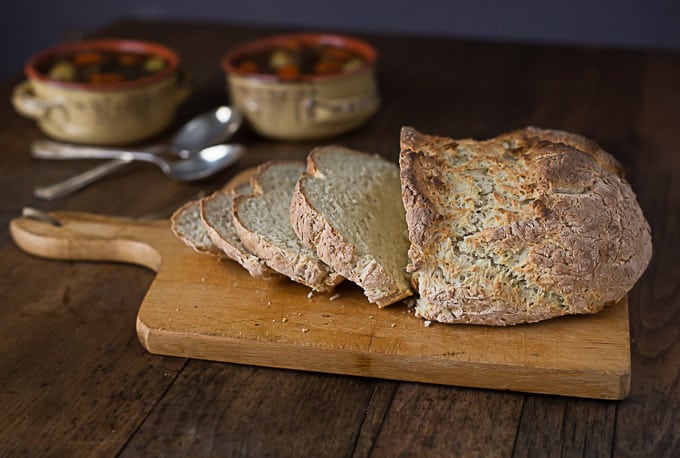
Irish soda bread is one of Ireland's most beloved traditional recipes, known for its rustic texture and simple ingredients. Made without yeast, this authentic Irish soda bread uses baking soda as a leavening agent, creating a hearty loaf with a crisp crust and tender interior. It's quick to prepare and perfect served warm with butter, alongside soups, stews, or traditional Irish meals.
This easy Irish soda bread recipe stays true to its roots while delivering reliable, delicious results every time. ll you really need is a few basic ingredients: salt, flour, baking soda, and buttermilk. The "trick" to achieving a perfect texture is not to over-knead it, as this will make it tough, ugh not good!
Jump to:
Why You'll Love This Recipe
- No yeast required - Baking soda does the work, so there's no rising time.
- Quick and easy - Mix, shape, and bake in under an hour.
- Simple pantry ingredients - Flour, baking soda, salt, and buttermilk.
- Rustic and authentic - A traditional Irish bread with classic flavor.
- Crisp crust, tender crumb - Golden on the outside, soft inside.
- Perfect for pairing - Delicious with soups, stews, butter, and jam.
- Beginner-friendly - No kneading or special equipment needed.
- Great for St. Patrick's Day - A must-have for any Irish-inspired meal.
Irish Soda Bread Background
Irish soda bread became popular around the 1800's when baking soda first became available. The brown soda bread, which is made with whole wheat flour, was more common, while bread made with white flour was for the wealthier class. A more refined flour, such as white flour, would have been more expensive. Irish soda bread is especially good when warm and slathered with butter!!! Everything is better with butter! Now, there are some versions of Irish Soda bread that contain dried fruits and/or caraway seeds.
Experts such as Rory O'Connell from the Ballymaloe Cookery School insist that this is not authentic. The reason? Dried fruits would have been a luxury item and by no means accessible to the general population.
In the beginning, Irish soda bread was made in a vessel called a "bastible", similar to a Dutch oven; and hung over an open fire. Coals were also set on the top so the bread would cook more evenly on the top and the bottom. Before baking, a cross is made with a sharp knife on the top of the loaf. Why? Well, the reason is mainly scientific. The cruciform pattern allows the heat to penetrate the bread more thoroughly thus assisting the cooking process. On a more superstitious note, there is a saying in Ireland, that the cross on the bread is "to let the devil out". However, in a predominantly Catholic country, the cross takes on added religious symbolism.
Step-by-step Photos
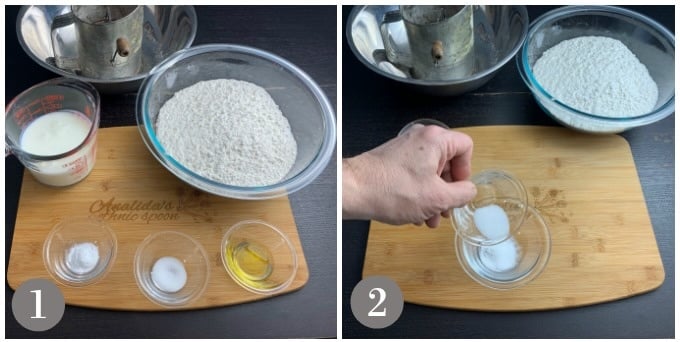
- Step 1: Preheat your oven to 425°F and gather all your ingredients. You only need a few: buttermilk, flour, salt, baking soda, and I like to brush a little olive oil on the top just before baking. Although the olive oil is not traditional, I like the rich look it gives to a baked loaf.
- Step 2: Mix together the salt and baking soda and add this to the flour.
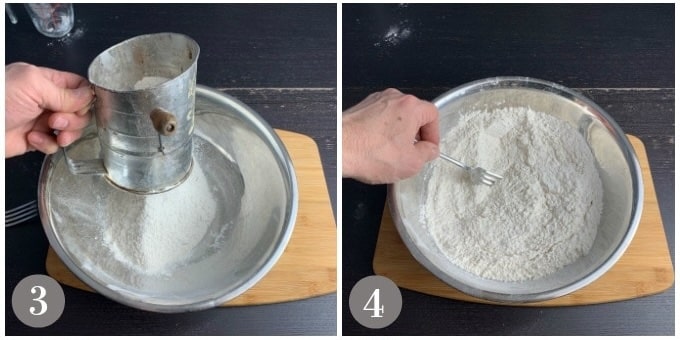
- Step 3: Sift the flour, salt, and baking soda mixture into a large bowl.
- Step 4: I like to further stir the mixture with a fork to be sure the salt and baking soda are evenly distributed. Once fully combined, make a well in the middle of the flour and pour on most of the buttermilk.
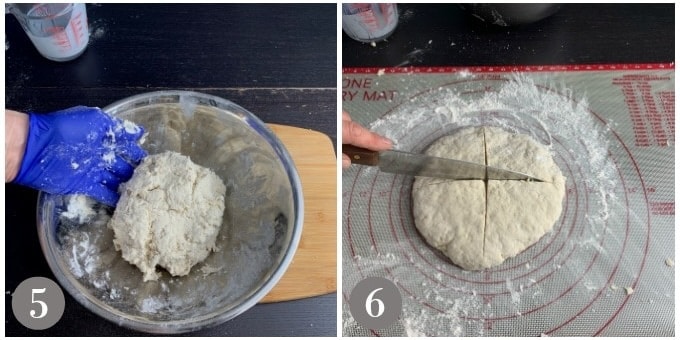
- Step 5: Hand mix to combine the buttermilk into the flour mixture until it just comes together to form a loaf. You don't want a sticky or runny dough that is too wet. Add a little more of the buttermilk if needed to get it to combine.
- Step 6: Knead the dough on a floured surface and then form the dough into a circle. The dough should be approximately 8 inches across and about 2 inches tall. Cut a cross about 1 inch deep in the top of the dough.
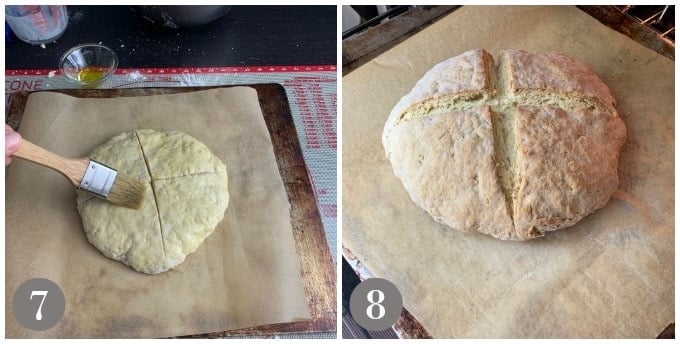
- Step 7: Brush the loaf with a little olive oil on top.
- Step 8: Bake for 25-30 minutes until golden brown, and you hear a hollow sound when you tap on the bottom.
Frequently Asked Questions
You can keep this at room temperature for about 4-5 days. Keep it sealed in a container or zip-top bag to prevent drying.
Yes, I actually like to freeze slices or even the whole loaf. Freeze in airtight freezer bags, and it stores nicely for up to 3 months.
When you tap on the bottom, it should sound hollow. Take it from the oven with mitts, and I usually use a spoon because it is hot, and if it sounds hollow and not a dense "thud," it is done.
Be sure to flatten the loaf to about 2 inches, and the diameter will be about 8 inches. This helps the middle bake better, and it will rise in the oven. Be sure your dough is not too wet to begin with. It should just come together and form a ball.
Sure, some readers have added 3 tablespoons of ground flaxseed or a bit of honey to the dough with good success. I would add the honey to the buttermilk before adding it to the flour.
You can quickly and easily make buttermilk from whole milk or 2% milk. Add 1 tablespoon of fresh-squeezed lemon juice or distilled white vinegar to 1 cup of milk. Let this sit at room temperature for 5-10 minutes to curdle. This recipe calls for 1 and ¼ cup buttermilk, so use 1 tablespoon plus 1 teaspoon in 1 and ¼ cups of milk.
Irish soda bread is typically made with white flour, while Irish brown bread uses whole wheat flour and has a denser texture and nuttier flavor.
Traditionally, a cross is cut into the top of the dough to help the bread bake evenly. This prevents the loaf from splitting in unexpected spots and also "to let the devil out" with the cross symbolizing the strong Catholic faith in Ireland.
More Irish Recipes
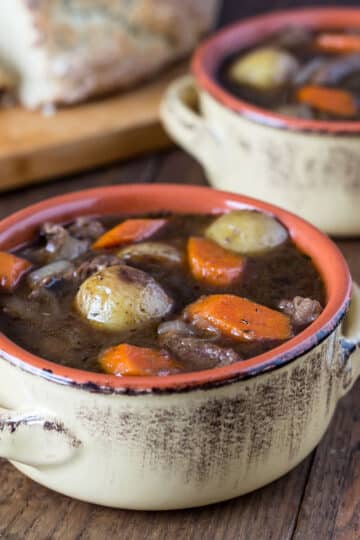
If you're building a full Irish-inspired spread, this soda bread fits right in. Serve thick slices alongside a hearty Guinness stew or a comforting pot of Dublin coddle to soak up every last bit of broth. Add a spoonful of Guinness mustard to the table for a bold, tangy kick that pairs beautifully with savory dishes. For something warm to sip, Scailtin Irish whiskey milk punch makes a cozy finish to the meal. And if you love traditional breads, be sure to try Irish brown bread as well - it's slightly sweeter, wonderfully rustic, and just as perfect with butter.
Irish butter cookies are a favorite melt-in-your-mouth shortbread cookie recipe that does call for Irish butter, no substitutes.
If you are visiting Killarney, Ireland I would recommend Killarney Lodge with their homemade baked breads and scones for breakfast to start your day of touring! If you make this recipe leave me a comment. I would love to hear from you.
📖 Recipe
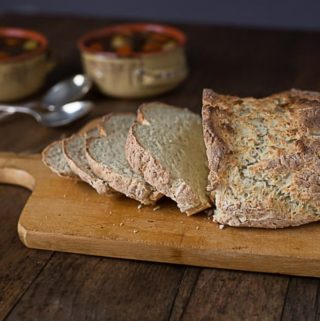
Irish Soda Bread Recipe - Traditional and Easy
Ingredients
- 3 ⅓ cups flour
- 1 teaspoon salt
- 1 teaspoon baking soda
- 1 ¼ cup buttermilk
- 1 teaspoon olive oil for brushing
Instructions
- Preheat oven to 425°F.
- In a large bowl, sift together flour, salt and baking soda. I like to mix with a fork after sifting to fully combine all the dry ingredients.
- Make a well in the middle of the flour mixture. Slowly add most of the buttermilk mixing thoroughly until well combined. The dough should be soft but not wet.
- Place the dough on a floured surface and knead lightly. Form the dough into an 8 inch circle. It will appear a bit flat but it will rise in the oven.
- Place on a floured or parchment lined cookie sheet.
- With a sharp knife, cut a 1 inch deep cross on the top of the bread.
- Brush the top with olive oil.
- Bake for 25-35 minutes until golden brown and the dough has a hollow sound when tapped on the bottom. Cool on a wire rack and serve warm.
Notes
- How long can I store the Irish soda bread? You can keep this at room temperature for about 4-5 days. Keep it sealed in a container or zip-top bag to prevent drying.
- Can I freeze Irish soda bread? Yes, I actually like to freeze slices or even the whole loaf. Freeze in airtight freezer bags and it stores nicely for up to 3 months.
- How do I know when the Irish soda bread is done when baking? When you tap on the bottom it should sound hollow. Take it from the oven with mitts and I usually use a spoon because it is hot and it if sounds hollow and not a dense "thud" it is done.
- Why did my loaf not fully bake in the middle? Be sure to flatten the loaf to about 2 inches and the diameter will be about 8 inches around. This helps the middle bake better and it will rise in the oven. Be sure your dough is not too wet to begin with. It should just come together and form a ball.
- Can I add other flavors? Sure, some readers have added 3 tablespoons of ground flax seed or a bit of honey to the dough with good success. I would add the honey to the buttermilk before adding to the flour.
- What if I don't have buttermilk? You can quickly and easily make buttermilk from whole milk or 2% milk. Add 1 tablespoon of fresh squeezed lemon juice or distilled white vinegar to 1 cup of milk. Let this sit at room temperature for 5-10 minutes to curdle. This recipe calls for 1 and ¼ cup buttermilk so use 1 tablespoon plus 1 teaspoon in 1 and ¼ cups of milk.


Helen @ Scrummy Lane says
Hello! Enjoyed reading about the history of soda bread ... and of course now I'm imaging eating a big hunk of it with some of that beautiful Guinness stew!
Analida says
LOL Helen!!!
I love Irish soda bread. I think I love Guinness Stew a bit more though, especially during our long northern winters. Let me know if you make it and how it turns out.
Michelle @ Feed Me I'm Hungry says
mmm.... bread. I've been meaning to give Irish soda bread a try for some time. Thanks for inspiring me!
Also did you change your logo/ site layout? The logo looks really lovely!
Analida says
I love Irish soda bread too. I will be posting another Irish bread recipe in March in honor of St. Patrick's day.
I did change the layout a bit. Thanks for the compliment.
Have a wonderful weekend.
Barbara Karr says
I am curious. The article states that a cake or pastry flour was used to make soda bread. Would you know if their cake flour and the cake flour used in the US are alike? I know the version of Soda Bread we eat today changed when the Irish came here and had to adapt the recipes using ingredients available here. It would seem like the bread texture would change with the changes of flour along with the taste.Also, the article said the less affluent used a type of whole wheat flour. Again would that flour be like the whole wheat flour used in the US? Thanks for reading. B Karr
Analida says
Hi Barbara! You raise some interesting points. I am not sure about our cake flour vs. European cake flour. I assume they are similar. The only difference can be in the way the wheat is processed. I have an American friend who took a cooking course in Ireland. She uses regular bread flour to make her breads here. As for the whole wheat flour, I believe they are similar. The whole wheat flour used by the less affluent back then was because white flour was considered better; how times have changed. Let me know if you have more questions.
Maney Pearl says
Guinness beef stew and Irish butter cookies would be a great combination for a reunion party. I think I just got a hint on something interesting. Thanks.
Saraid says
Made this today to have with corned beef and cabbage tonight!! I had to sneak some. I was worried I over kneaded it but it turned out lovely! I forgot that heavy kneading literally takes forever. Glad I have no patience so I didnt overdo it haha. Also the tip on it sounding hollow is a perfect description. I never quite knew how to describe that little sound the bread makes with the thick crust when you tap it. Love this!!
Analida says
I am so glad you enjoyed the recipe!