

Kimchi is Korea's iconic fermented cabbage dish, celebrated for its bold, spicy flavor and remarkable versatility. This traditional Korean kimchi recipe uses napa cabbage, garlic, ginger, and Korean chili flakes to create an authentic homemade kimchi that's delicious on its own or served alongside countless Korean dishes.
This Korean kimchi is vegetarian, quick, lasts for months, and is loaded with probiotics. Not to mention budget-friendly. Store-bought kimchi is generally a piggybank breaker.
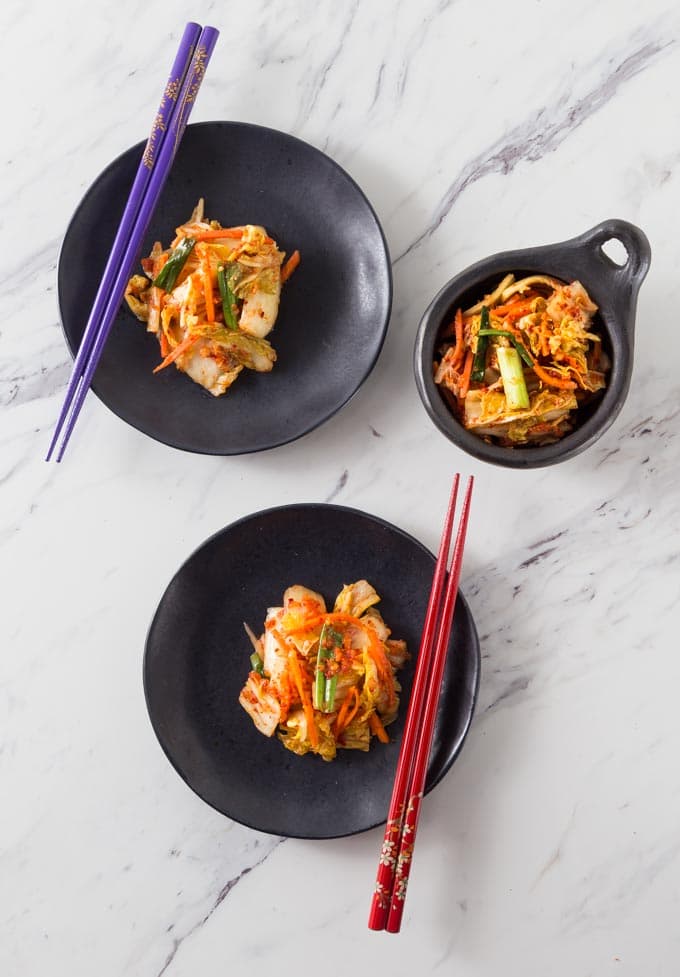
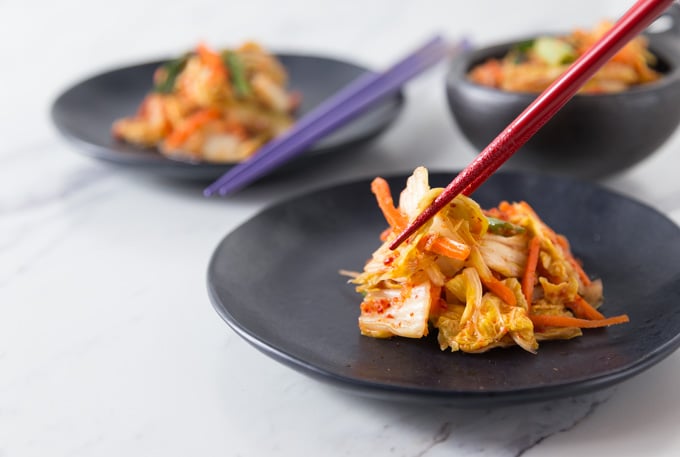
- 🌶️ What is it? A foolproof, vegetarian Korean kimchi made by salting napa cabbage, coating it in a spicy apple-ginger-garlic paste, and letting it ferment in jars - no fermentation weights required.
- ❤️ Why you'll love it? Budget-friendly, loaded with gut-healthy probiotics, and keeps for 3-5 months in the fridge - a homemade upgrade over pricier, less-fresh store-bought kimchi.
- 👩🍳 How do you make it? Salt and wilt cabbage for 2 hours, rinse and dry it, then toss with a blended apple-ginger-garlic-chili paste, carrots, and green onion. Pack into jars, submerge in brine, and ferment 2-4 days before refrigerating.
Jump to:
Why You'll Love This Recipe
- Authentic Korean flavor
- Easy step-by-step instructions
- Naturally fermented for incredible depth
- Packed with bold, spicy flavor
- Great for meal prep
- Delicious as a side dish or ingredient
- Keeps well in the refrigerator
What is Kimchi?
Kimchi is a traditional Korean fermented vegetable dish most commonly made with napa cabbage, Korean chili flakes (gochugaru), garlic, ginger, and seasonings. Fermentation creates its distinctive tangy flavor and crisp texture, making kimchi one of Korea's best-known and most beloved foods.
Why Is Kimchi So Popular?
Kimchi is prized for its bold flavor and versatility. Because it is naturally fermented, it develops a pleasantly tangy taste and complex depth that continues to evolve as it ages. It can be enjoyed fresh, lightly fermented, or fully matured depending on your taste preference, making it one of the most versatile staples in Korean cuisine. Kimchi has been a cornerstone of Korean cuisine for centuries and is served with nearly every traditional Korean meal.
Why homemade probiotics are the way to go
Upon return home from living in Asia, my daughter "forced" the household onto her probiotics bandwagon. Not the worst. Her claim was that the sauerkraut, kimchi, kombucha, etc., at the supermarket are more regulated, sometimes pasteurized, hence not packed with the good-for-your-gut bacteria. Homemade is the way to go to get the kimchi benefits.
In Asia, fermented foods are a standard at meals. She said even at restaurants, people would order a plate of pickled vegetables.
Where did we get the recipe for kimchi?
One of her prized items from Asia was a Korean kimchi recipe. She got it from a shop owner, who got it from a Korean expat. So we knew it would be delicious, but also accommodate for ingredient scarcity that expats run into. She told us that people improvised, and often.
What? No fermentation weights??
I appreciate that this recipe for making kimchi is vegetarian. I'll leave adding shrimp/octopus/fish to the pros. This one's prep is just under an hour. No need for fermentation weights, I've got a hack for that. Jar it and forget it for 3 days. Another thing, this kimchi has come out perfect time after time. My daughter says she went through a lot of duds before this shopkeeper handed over recipe gold.
When you're ready to enjoy your kimchi, I recommend pairing it with tender Korean Bulgogi Beef and steamed rice.
How to Make Kimchi Step-by-Step
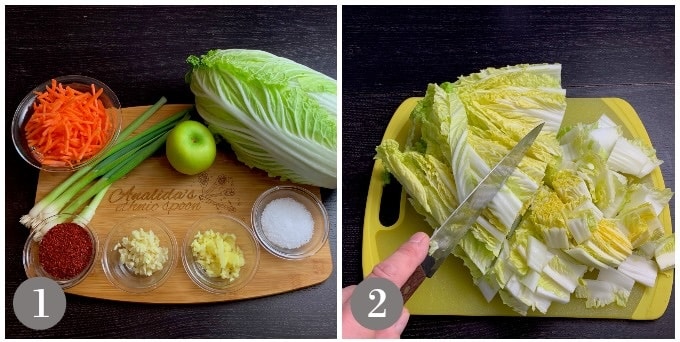
- Step 1: Gather your ingredients: gochugaru flakes , fresh minced ginger, minced garlic, salt, matchstick carrots, green onion, apple, and napa cabbage. ( Note: If you don't have gochugaru flakes at your local Asian market you can substitute the same amount of the ever-popular crushed red pepper flakes or sriracha .)
- Step 2: Cut 2 lbs. green or napa cabbage into bite-sized squares. Set aside a few whole outer leaves.
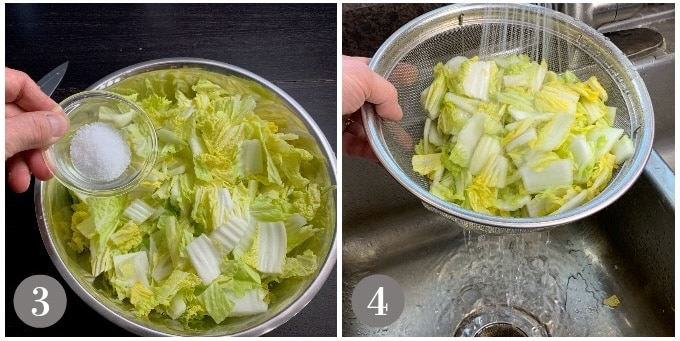
- Step 3: Use a large bowl or pot and sprinkle 2 tablespoon of sea salt over the leaves. Massage and toss the salt into the leaves for 1 minute. Let the cabbage wilt for 2 hours at room temperature.
- Step 4: After the cabbage is done wilting, RINSE and DRAIN IT. Pat the leaves dry too. This step is very important as it removes excess salt.
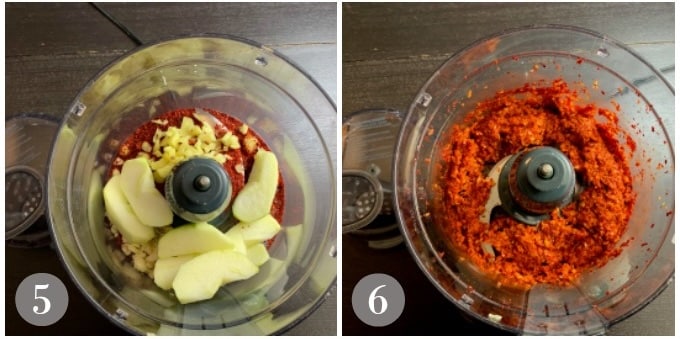
- Step 5: In a food processor, blend up one apple, chili pepper flakes, garlic, and ginger.
- Step 6: This should resemble a paste. Cover it and pop in the fridge.
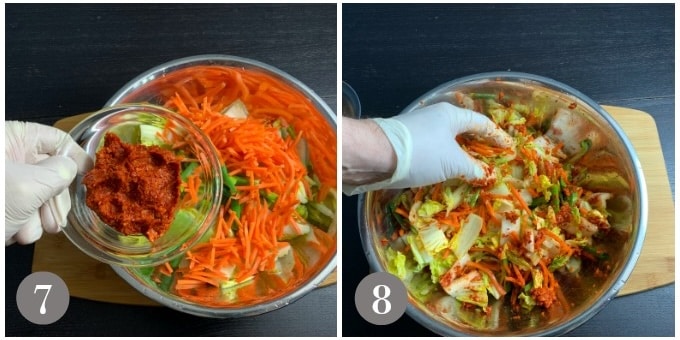
- Step 7: Add the cabbage and carrots to a large bowl. Chop up green onions into 1 inch pieces and add those. Add the paste after all the vegetables are mixed.
- Step 8: Put on gloves for this step. (Why? Because chili WILL burn your hands). Next, take your paste out of the fridge and combine it all with the cabbage.
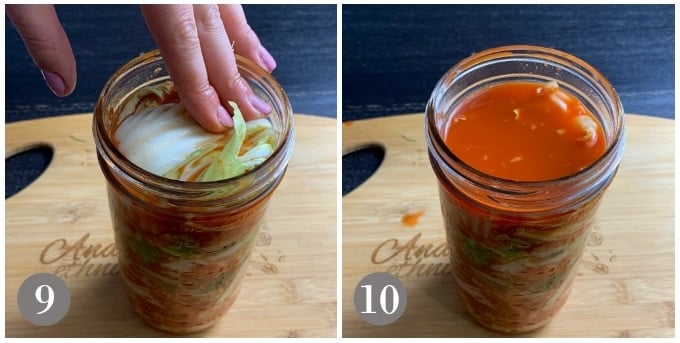
- Step 9: When the cabbage is well-coated, pack it into mason jars. Take the spare leaves, fold them and pack them into the top of the jar. This will keep the pieces down under the brine.
- Step 10: Add a small amount of water to each jar. Only enough to keep everything under the brine. GO SLOWLY. The mixture does need breathing room at the top. Use a paper towel and mason jar ring or recap with airlock. I recommend letting it sit at least three days or two days if you live in a tropical climate. If your climate is cold and dry, taste it after three days. Bubbles are normal, and good! It should still have crunch, but the tanginess of sauerkraut.
Then, when it's ready, remove and discard the top "weight" leaves and store airtight in the fridge. It will keep for 3-5 months.
Pair this kimchi with fluffy rice and one of my many Asian recipes.
Tips for Perfect Kimchi
- Use fresh napa cabbage.
- Salt evenly to draw out moisture.
- Rinse thoroughly before seasoning.
- Wear gloves when mixing the chili paste.
- Pack tightly into clean jars.
- Leave headspace for fermentation gases.
- Taste as it ferments to find your preferred flavor.
Frequently Asked Questions
Properly refrigerated, homemade kimchi can last for several months, with the flavor becoming more pronounced as it continues to ferment.
Bubbles are a normal sign that fermentation is taking place.
No. Older kimchi simply develops a stronger, tangier flavor and is often preferred for soups, stews, and fried rice.
Yes. Refrigeration slows fermentation and helps maintain quality after the desired flavor develops.
What to serve with Kimchi?
Kimchi pairs beautifully with grilled meats, rice bowls, fried rice, ramen, dumplings, and noodle dishes. It also adds bold flavor to sandwiches, burgers, tacos, and scrambled eggs. If you're exploring more international flavors on Ethnic Spoon, serve it alongside Korean-inspired meals or use it as a flavorful condiment with grilled meats and rice dishes. Here are more pairing ideas below:
Korean BBQ Pork Chops - The spiciness of Korean pepper paste and the smokiness of the grill always has me drooling.
Vietnamese Coconut Pork-Tender stewed pork with creamy coconut
Indonesian Turmeric Rice with Cashews- Warming turmeric and crunchy cashews make an aromatic dish
Spicy Shrimp Sushi Bowl- Tender shrimp, creamy avocado, and tangy sushi rice
Super Easy Pad Thai- Umami noodles with tender shrimp, herbs, and lime
📖 Recipe

Korean Kimchi Recipe - Traditional Napa Cabbage Kimchi
Ingredients
- 2 pounds napa cabbage or green cabbage
- 2 tablespoon coarse sea salt
- 2-3 cloves garlic
- 1 teaspoon fresh ginger
- 1 green apple
- 3 tablespoon crushed red pepper flakes As a substitute you can use sriracha or Korean chili flakes: gochugaru
- 4 green onions
- 1 cup matchstick carrots
Instructions
- Wash all vegetables. Set aside a few outer leaves of the cabbage.
- Cut the cabbage into small, square pieces. Think bite size. Cut the green onion into ½ inch pieces. Put onions in the fridge.
- Sprinkle cabbage with sea salt. Massage for 1 minute to ensure all cabbage is coated in salt. After this, allow the cabbage to wilt for 2 hours at room temperature.
- In a food processor or mortar, combine apple, ginger, garlic, and chili until smooth. Save this in the fridge for later. This is your paste.
- After 2 hours, drain the cabbage and pat the leaves dry. This will remove the excess salt.
- Use gloves. Combine paste, carrots, green onion, and cabbage until it's all well-coated.
- Pack the kimchi into glass jars leaving room at the top. Fold the extra leaves and press them into the top to hold down the smaller leaves. This will save you from using fermentation weights.
- SLOWLY add water to the jars until everything is under the brine. Make sure to leave ½ inch of breathing room at the top. Use mason jar rings and a paper towel or reCAP with an airlock to seal.
- Leave out at room temperature for 2-4 days.
- When finished, place sealed in fridge. It keeps for 3-5 months.


Corina Blum says
This looks delicious! I really need to try kimchi again as I tried it years ago and didn't like it so have avoided it ever since. I don't know why as it's full of the kind of flavours I like!
Gloria says
I have only tried kimchi a few times. I have never made it at home. I do make bibimbap, so this would be the perfect condiment to go with it.
Kiki Johnson says
I've been meaning to make my own kimchi for ages now! I love that you found a way around using weights - your recipe looks really doable and I think this might be the last push I needed! Thanks for sharing, Analida!
Analida says
Thanks Kiki! I hope you enjoy it!
Kelly Anthony says
This was such a great read! I had no idea how to make kimchi at home before. Thanks for the cooking lesson 😉
Analida says
It so easy to make and a huge savings over the store bought kimchi too! Enjoy!
Michelle says
I've always been a little scared of making my own kimchi, but I'm definitely going to give this a go. Thank you for such a detailed post on how to make it, I'm hoping I can't go wrong with this x
Analida says
This one has not failed me and it has a nice spicy kick too! Enjoy!
Monica says
I think I am the last person in America to try kimchi, but I find the idea of making it so much more appealing than buying it - more of a fun experiment that way! Everyone raves about the flavor it adds!
lauren says
Kimchi is so good! I always love adding kimchi to dishes wherever i can. It's a little intimidating to try and make at home with this recipe has so many good details.
Eileen Kelly says
We love kimchi! I agree, homemade is better than store made! It is pure and delicious! I love your recipe! I have made it with a very complicated recipe! Your recipe is so much easier and looks delicious!
Analida says
It really is quite simple to make. I hope you like it!
Jyothi (Jo) says
I never tried kimchi at home before! I think i'm missing on it. Need to try it soon! Thank you for sharing detailed recipe with details.
Sam | Ahead of Thyme says
My husband is obsessed with kimchi! This looks so good and easy to make. I can't wait to surprise him with it!
Jagruti Dhanecha says
I had never tried Kimchi, but since I found out that it is suitable for a vegetarian I was on a hunt for a homemade recipe that is packed with flavours, and now I have your recipe surely I am going to make so soon.
Julie says
I love kimchi, but have never tried making it at home. Thank you for breaking down all the steps in this easy to follow recipe!
Nicoletta De Angelis Nardelli says
Love that this is a vegetarian recipe! And it looks so good, plus not too hard to make and definitely a keeper. Thank you!
Dawn says
Hi, I'm in the process of making it but my paste isn't paste, can you add a little filtered water?
Analida says
Yes you can add some water to the paste to get it to a paste consistency. The moisture content of the apples can vary a bit so adding a little water to get it flowing in the food processor may help it along.
Dawn says
Hi Analida, my Kimchi has finished today. I had to use a sweetheart cabbage as I couldn't find the napa cabbage here. Both me and my husband have just had a sample, rather sceptical, but WOW 👌 this is delish! Now decanted into a tupperware type tub.... What a hit on my first time fermentation! Definitely gives me the courage to go further with this, so thank you sooooooo much!
Analida says
Thank you so much! I usually have this in my fridge at all times! Enjoy!